
What is Thoracic Outlet Syndrome?

What is Thoracic Outlet Syndrome?
Thoracic outlet syndrome is a pain syndrome of the upper extremities. Doctors often use the abbreviation ‘TOS’ to describe thoracic outlet syndrome. Symptoms of thoracic outlet syndrome may include pain, tingling, numbness, weakness, or blood clots and abnormal blood flow in one or both upper extremities. Three distinct types of thoracic outlet syndrome exist. Thoracic outlet syndrome can range from an emergent surgical condition to a progressive, chronic pain syndrome that alters the lives of TOS patients.
Symptoms of Thoracic Outlet Syndrome
TOS symptoms result from compression of nerves, arteries, or veins as they travel from the neck and chest to the arm. Compression of each of these vital structures causes a different group of symptoms.
Compression of the subclavian vein occurs in many people, often without symptoms of TOS. In certain groups of people, however, this compression results in the formation of a blood clot in the subclavian vein near the neck. As a result, blood flow from the arm to the heart is impaired, and these patients experience a number of striking symptoms:
- Swelling of the affected arm
- Dusky or blue color of the arm
- New superficial veins of the affected shoulder and chest
- Shortness of breath may occur if a blood clot travels to the lungs
Compression of the subclavian artery may occur to a mild extent in normal people. However, when this compression is severe and prolonged, damage of the underlying arterial wall develops. The damaged arterial wall may enlarge, forming an aneurysm, or a scar may form within the artery, narrowing the arterial diameter. These findings form the diagnosis of arterial TOS. Blood clots may form within the damaged arterial segment. These blood clots may break off and travel down the arm, blocking smaller arteries. A large blood clot at the site of damage may totally block blood flow to the arm. As a result of large or small blood clots in the arteries, areas of tissue death may occur. Therefore, the diagnosis of arterial TOS should be made promptly and accurately. Dramatic symptoms of arterial TOS include:
- Coldness of the arm
- Pale color of the arm
- Loss of pulses
- Weakness of the arm
- Pain or tingling in the arm
While the symptoms of venous TOS and arterial TOS are dramatic and straightforward, the symptoms of Neurogenic TOS are often cryptic, for a number of reasons. First, there are many known anatomic variants of the thoracic outlet that may compress the brachial plexus. Second, there are significant changes of each thoracic outlet that occur with movement of the arms. Third, we know of many variants in the branching pattern of the brachial plexus. Fourth, even in the case of a typical brachial plexus branching pattern, the distribution of thousands of nerve fibers within the brachial plexus can vary highly. As a result of all of these variables, the exact point of compression and the underlying affected nerve component remains uncertain in most patients with Neurogenic TOS symptoms.
Given the expected broad range of possible symptoms in neurogenic TOS, patients often report the following symptoms:
- Pain
- Numbness
- Tingling
- Skin color changes
- Weakness
- Loss of coordination
What are the 3 Types of Thoracic Outlet Syndrome?
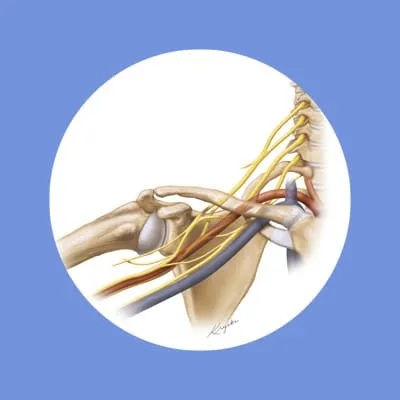
Neurogenic Thoracic Outlet Syndrome
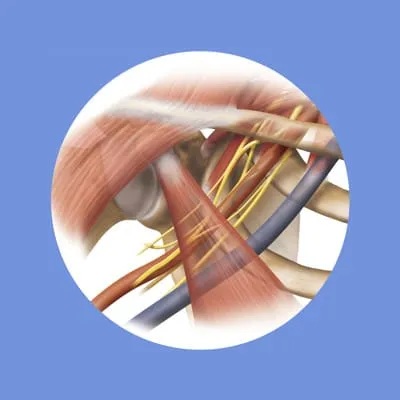
Venous Thoracic Outlet Syndrome
Compression of a large vein allows the formation of blood clot, which blocks blood flow from the arm to the heart.
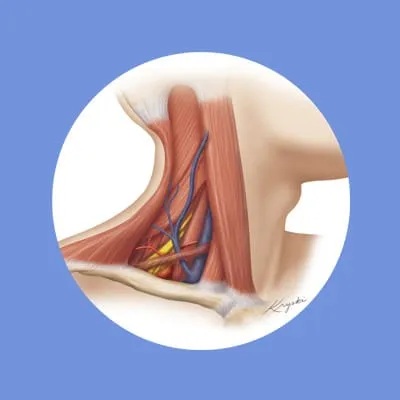
Arterial Thoracic Outlet Syndrome
Neurogenic Thoracic Outlet Syndrome
A large, branching network of nerves, the brachial plexus, passes through each thoracic outlet. Compression or tension on these nerves occurs in patients with thoracic outlet syndrome. Compression or tension can cause damage to these nerves. When the damage results in symptoms, neurogenic thoracic outlet syndrome is present. Neurogenic thoracic outlet syndrome patients may experience pain, tingling, abnormal sensations, weakness, or muscle atrophy. Neurogenic TOS is the most common type of TOS, 95 to 98% of all TOS cases. Neurogenic TOS is also the most difficult type of TOS to diagnose.
Venous Thoracic Outlet Syndrome
A single, large subclavian vein passes through each thoracic outlet. Compression of this vein can occur in the thoracic outlet, especially due to arm movement. Repeated compression may eventually damage the vein, resulting in scarring and narrowing. Blood clot may form in this damaged vein segment, and can grow in size, or break off and travel to the lungs or brain. When blood clot forms, venous TOS is present. Venous TOS is very uncommon, accounting for 2 to 5 % of TOS cases. Patients with venous TOS often present with swelling and discoloration of the arm and upper chest. Doctors should diagnose and treat venous TOS urgently by resolving the blood clot, and then relieving the compression of the vein.
Arterial Thoracic Outlet Syndrome
A single, large subclavian artery passes through each thoracic outlet. Compression of this artery can occur in the thoracic outlet, more likely if a cervical rib is present. Repeated compression may damage the artery, resulting in scarring and narrowing, or focal dilation. Blood clot may form in the damaged arterial segment. This clot can break off and block arteries in the arm. When this occurs, arterial TOS is present. Arterial TOS is rare, only 1% of TOS cases. Arterial TOS patients may have a pulsatile neck mass, with weakness, pale color, coldness or gangrene of the arm. This sudden blockage of blood flow is a surgical emergency, treated by removal or dissolving of the clot. After this emergent treatment, doctors usually relieve the structures compressing the artery, and repair the damaged arterial segment.
Anatomy of the Thoracic Outlet
The anatomy of the thoracic outlet appears incredibly complex. Besides the native anatomy, a number of anatomic variants and anomalies create more complexity. These variants can compress the nerves, artery or veins, resulting in TOS. Moreover, motion of the arms causes complex changes in the anatomic tunnels of the thoracic outlet. When you understand the anatomy of the thoracic outlet, you have taken the first step in understanding thoracic outlet syndrome.
Thoracic Outlet Anatomy
You can feel the thoracic outlet on each side of your neck. Specifically, the thoracic outlet is the hollow space above your collarbone, between your shoulder and your neck. Slide your hand down either side of your neck to find the thoracic outlet.
Three vital structures pass from the neck and chest through each thoracic outlet to enter each arm. Specifically, the subclavian artery, subclavian vein, and brachial plexus pass through the thoracic outlet on each side.
Each structure must pass through a series of narrow tunnels to reach the arm. These tunnels have bony or soft tissue structures that define their walls. Any abnormality of these walls can narrow one of the critical tunnels. In this way, an abnormal tunnel can compress one or more of the vital structures.
In addition, the thoracic outlet will change when the shoulder is moved. Since the shoulder has a very broad range of motion, additional narrowing of one or more tunnels may take place.
As you can see, each thoracic outlet is quite complex, both at baseline and with motion. You can learn more about this complex anatomy by clicking this button.
What Causes Thoracic Outlet Syndrome?
The nerves, artery and vein must be free to pass through the thoracic outlet. However, anatomic variants, acquired abnormalities, and abnormal arm motion may cause compression of these vital structures. In that case, patients may experience the symptoms of thoracic outlet syndrome. People with neck injuries, occupational injuries or overuse, and overhead athletes are all at risk for developing thoracic outlet syndrome.
Causes of Thoracic Outlet Syndrome
Doctors are aware of factors that increase the risk of developing TOS:
- Motor vehicle accidents: People who suffer neck injuries in motor vehicle accidents may develop TOS. Most people have heard the term “whiplash,” which is non-specific. Many whiplash cases actually represent TOS.
- Repetitive stress injuries: Often related to non-ergonomic work environments, repetitive stress injuries include a broad group of painful disorders. Thoracic outlet syndrome falls within this group.
- Computer use: With increased use of computers, phones, and tablets, many people adopt poor posture for long hours. This contributes to abnormalities in the thoracic outlet.
- Overhead athletics: Athletes such as volleyball players, baseball pitchers, and swimmers are at increased risk of developing thoracic outlet syndrome.
- Manual laborers: Jobs requiring repetitive arm use (e.g., drivers, painters, construction workers) increase the risk of TOS.
- Cervical rib: Since 1895, when Roentgen created the first medical x-ray , doctors have known some patients have a cervical rib (an extra rib above the first rib). However, most people with cervical ribs do not have TOS. Many TOS cases are caused by soft tissue abnormalities not visible on X-rays, so this alone is not a reliable diagnosis.
History of Thoracic Outlet Syndrome
Like many other scientific pursuits, the history of TOS takes many twists and turns. In essence, The history revolves around human nature, curiosity and discovery. Here you can enjoy a wild and fascinating ride of dead ends and discoveries, egos and errors, personalities and politics. Learn about the history of TOS, starting from a simple English housemaid to modern robotic surgeons.